


Insurance claims: a beautiful idea when you’re paying your premiums, right? You hand over your money, cross your fingers, and hope you never actually need to use it.
But when the unexpected happens—a car accident, a house fire, or the time your dog chewed through your expensive shoe collection—suddenly, you find yourself diving into the abyss of the claims process.
You’re thinking: “I’ve got insurance, they’ll cover this, right?” Well, hold on to your receipts and start gathering your documents because insurance companies play by their own rules, and one of those rules is: prove it.
Top Takeaways and Key Concepts
Document everything immediately. Gather photos, receipts, reports, and repair estimates as soon as possible.
Use clear, detailed photos. Capture wide and close-up shots with timestamps to prove the damage accurately.
Obtain official reports. Police or incident reports provide authoritative evidence to support your claim.
Organize and track records. Keep physical and digital copies of all documents and correspondence systematically.
Know your policy and limits. Understand coverage, exclusions, and claim procedures before filing to avoid surprises.
Summary of This Article
This article emphasizes the critical role of documentation in successfully filing an insurance claim. It advises gathering detailed photos, official reports, and receipts, keeping records organized, and understanding your policy’s coverage and limits. Timely and thorough documentation increases the likelihood of claim approval and expedites the process. Additionally, tracking all correspondence with the insurer and seeking legal assistance when necessary can protect your interests and ensure you receive the compensation you deserve.
Please Note: This post may contain affiliate links. If you click one of them, we may receive a commission at no extra cost to you. As an Amazon Associate, I earn from qualifying purchases.
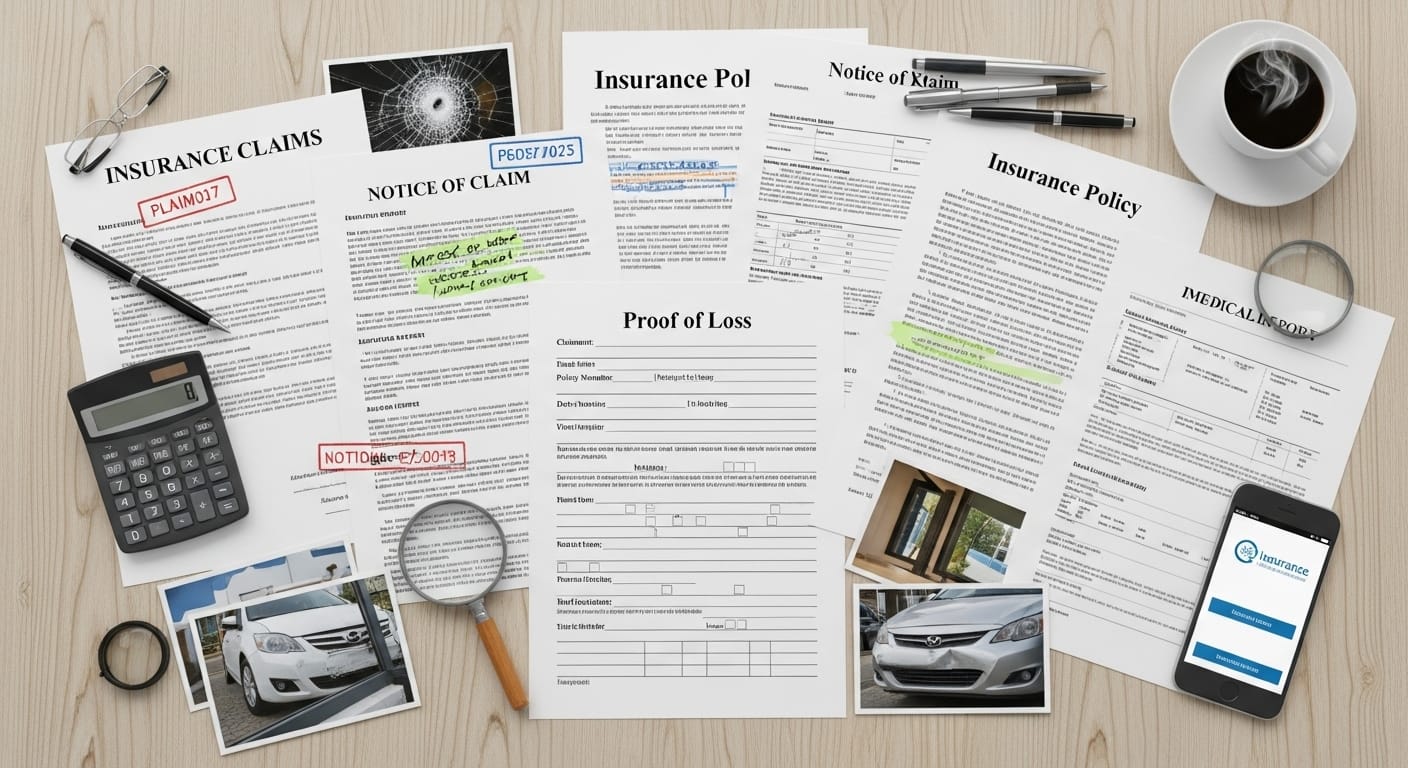
In the world of insurance, documentation is king. And, let’s be honest, it’s not as glamorous as a courtroom drama, but without it, your claim could end up as a tragic failure. We’re talking about a whole lot of paperwork that proves the incident actually happened and that it’s covered under your policy.
Let’s break down why this is so important, how to do it right, and how documentation could be the difference between you getting paid or stuck with a massive bill.

Documentation: Your Best Friend in a Claim
Picture this: you’ve just had a minor fender-bender. You’re shaken, maybe even a little upset, but you think to yourself, “It’s okay, I have insurance.” So, you call the company, explain the situation, and expect them to take care of the rest.
But here’s the thing—without proper documentation, you’re going to have a tough time proving the damage. It’s like going to a party without an invitation and expecting to get in.
Insurance companies want to know the details—the more you provide, the better. Photos of the damage, a copy of the police report (if applicable), your car’s VIN number, and even your repair bills are essential pieces of the puzzle. Without these, you might as well be trying to convince them that a unicorn caused the damage.

Why Pictures Speak Louder Than Words
It’s a funny thing—people love to talk, but insurance companies? Not so much. They like hard evidence, especially in the form of photos. If you’ve been involved in a car accident or your home has suffered damage, don’t just tell the insurer about it. Show them.
I’m talking about clear, detailed images that capture the full extent of the damage. You’d be surprised how many people make the mistake of assuming that a couple of blurry, grainy pictures will cut it. They won’t.
Take wide shots of the scene, as well as close-ups of any specific damage. If you’re filing a claim for a roof leak, get photos of the area around the leak, the water damage inside, and the roof itself. Don’t leave any stone unturned. If possible, include timestamps or metadata that prove the photos were taken immediately after the incident. It may seem like overkill, but trust me, insurance adjusters will appreciate it.
The Power of a Good Report


Here’s a scenario: you’re in a car accident. The police show up, do their thing, and make a report. Now, you’re thinking, “Well, that’s great, but what do I do with this piece of paper?” First off, don’t lose it. Second, understand that this report can be a game-changer when filing a claim. A police report serves as an official document, and insurance companies love official documents.
A well-written police report will have details about the incident that could make or break your claim. It can help show fault, confirm damages, and even provide witness statements. So, if you’re involved in an accident or any event that requires legal involvement, always ask for the report.
Make sure it’s clear and factual—nobody likes a police report that’s vague or full of errors. If there’s a mistake, get it corrected immediately.

Keep Your Records Organized
Let’s be honest here: organizing paperwork is no one’s idea of a good time. But here’s the thing—if you’ve got a drawer full of receipts, bills, and medical records for that car accident you had six months ago, how are you ever going to find anything when the insurance company asks for it?
Take a few minutes to organize everything. Keep copies of your policy, repair bills, medical receipts, and correspondence with the insurance company in a file that’s easily accessible. Make it a habit to keep records of everything.
You might be thinking, “Oh, I’ll never need these,” but when the time comes to file a claim, you’ll be glad you didn’t toss that pile of receipts. Bonus tip: make digital copies of everything. It’s safer and easier to find when you need it.
Don’t Forget Your Policy
You’ve probably skimmed through your policy when you first signed up, thinking, “I’ll never need this.” Now, with a claim in the works, it’s time to revisit that policy. Believe me, your insurance company will. Knowing your policy inside and out can help you determine what’s covered, what’s excluded, and what your limits are.
A common mistake people make is assuming their insurance covers everything. Surprise! It doesn’t. Review the exclusions in your policy carefully. If you don’t understand something, ask your agent for clarification. It’s much easier to resolve any confusion early on than to find out your policy doesn’t cover something after you’ve filed a claim.
The Importance of Timely Documentation
Timing is everything when it comes to documentation. It’s not enough to have great records; you need to have them ready as soon as possible. Filing a claim in a timely manner increases your chances of getting compensated quickly. Waiting too long can not only delay the process but can also cause your claim to be rejected altogether.
For example, if you’re filing a health insurance claim, don’t wait months before submitting your medical bills. The longer you wait, the harder it can be to prove that the charges were legitimate. If your house was damaged in a storm, don’t wait until the next hurricane season to start gathering proof. Get it done immediately.
Keeping Track of Correspondence
I can’t tell you how many times I’ve seen people fall into the trap of forgetting to keep a record of their communications with the insurance company. And by communications, I mean every phone call, email, and even handwritten note.
These exchanges might seem insignificant at the time, but they could be crucial later when you need to prove that you followed the correct procedures or that the insurance company didn’t do their part.
Whenever you speak with an insurance representative, note the date, the person you spoke with, and a brief summary of what was discussed. If it’s a phone call, follow up with an email or letter summarizing the conversation. This paper trail will make your life a whole lot easier if you run into any issues.
Legal Help Can Make the Difference
Okay, let’s be real for a moment: insurance companies aren’t exactly in the business of making things easy for you. If your claim is denied or if you’re getting nowhere with your documentation, it might be time to bring in some legal help.
A lawyer specializing in insurance claims can help you navigate the process, gather the necessary documents, and even fight on your behalf if things get messy.
Having an attorney on your side can take the pressure off, especially if the insurance company is dragging their feet or playing hardball. They know the legalities of your case and can help you get the compensation you’re entitled to.
Resources
How to File a Successful Insurance Claim
https://www.consumerreports.org/cro/insurance/insurance-claim-filing
The Importance of Documentation in Insurance Claims
https://www.nolo.com/legal-encyclopedia/documentation-insurance-claims
Understanding the Claims Process in Detail
https://www.iii.org/article/understanding-claims-process
Frequently Asked Questions
Why is documentation important in an insurance claim?
Documentation provides the evidence insurers need to verify your claim. Without proper proof, your claim may be delayed, reduced, or denied entirely.
What types of documents should I collect after an incident?
Gather photos, receipts, police or incident reports, medical records, and repair estimates. These materials help establish the cause, extent, and cost of the damage.
How can photos help strengthen my insurance claim?
Clear, timestamped photos visually prove the damage and its severity. Include wide shots for context and close-ups for detail to support your written report.
Why should I keep a record of all correspondence with my insurer?
Tracking emails, letters, and phone call notes creates a paper trail. This helps prove compliance with claim procedures and prevents miscommunication.
What should I know about my insurance policy before filing a claim?
Review your policy’s coverage limits, exclusions, and claim procedures. Understanding your rights and responsibilities avoids surprises during the claims process.
How soon should I start documenting after an incident occurs?
Begin immediately. Prompt documentation ensures accuracy, prevents evidence loss, and increases the likelihood of a faster claim resolution.
When should I consider hiring a lawyer for my insurance claim?
If your claim is denied, delayed, or underpaid, consult an attorney. A lawyer can handle disputes, ensure proper documentation, and protect your financial interests.

Kevin Collier is a legal expert passionate about simplifying complex legal concepts for everyday individuals. With a focus on providing clear, practical information, he covers a wide range of topics, including rights, responsibilities, and legal procedures. Kevin aims to empower readers with the knowledge they need to navigate the legal landscape confidently, ensuring they can make informed decisions regarding their legal matters. Through insightful articles and easy-to-understand resources, he helps demystify the law, making it accessible to all.